 电子书百科大全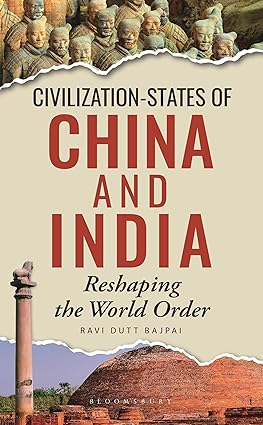
Civilization-states of China and India: Reshaping the World Order
by: Ravi Dutt Bajpai (Author)
Publisher: Bloomsbury Academic India
Publication Date: 2024/4/20
Language: English
Print Length: 300 pages
ISBN-10: 9356401993
ISBN-13: 9789356401990
Book Description
Ravi Dutt Bajpai examines some of the pivotal episodes in the modern history of China and India to argue that their behaviours reflect the self-identity of a civilization-state. The book starts from the progression of China and India into putatively modern polities during the colonial period, as the two indigenous societies imagined their national identities and nationalist aspirations primarily by contrasting their civilizational attributes with the Western colonial occupiers. As newly independent nation-states, both believed that their international status flowed from their civilizational glories. Therefore, despite their material and institutional fragility, China and India decided to pursue complete autonomy to manage their domestic and foreign affairs. Indian Prime Minister Nehru's policy of non-alignment, envisioning an alternate world order beyond the great power competition, was inspired by Indian civilizational ethos. The book also examines the Sino-Indian war of 1962 from a civilization-state perspective and argues that Tibet represented a conflict of civilizational influence.Chapters also explore some of the more recent developments, such as the Indian nuclear test of 1998, China's ambitious Belt and Road (BRI) infrastructure project aimed at reviving the ancient Silk Road, and India's campaign to regain its civilizational status of Vishwa Guru, as the continued manifestations of the two civilization-states endeavouring to regain their past glories in the contemporary world.
About the Author
Ravi Dutt Bajpai examines some of the pivotal episodes in the modern history of China and India to argue that their behaviours reflect the self-identity of a civilization-state. The book starts from the progression of China and India into putatively modern polities during the colonial period, as the two indigenous societies imagined their national identities and nationalist aspirations primarily by contrasting their civilizational attributes with the Western colonial occupiers. As newly independent nation-states, both believed that their international status flowed from their civilizational glories. Therefore, despite their material and institutional fragility, China and India decided to pursue complete autonomy to manage their domestic and foreign affairs. Indian Prime Minister Nehru's policy of non-alignment, envisioning an alternate world order beyond the great power competition, was inspired by Indian civilizational ethos. The book also examines the Sino-Indian war of 1962 from a civilization-state perspective and argues that Tibet represented a conflict of civilizational influence.Chapters also explore some of the more recent developments, such as the Indian nuclear test of 1998, China's ambitious Belt and Road (BRI) infrastructure project aimed at reviving the ancient Silk Road, and India's campaign to regain its civilizational status of Vishwa Guru, as the continued manifestations of the two civilization-states endeavouring to regain their past glories in the contemporary world. Read more
Civilization-states of China and India: Reshaping the World Order
相关推荐
 AI in Museums: Reflections, Perspectives and Applications
 Übersetzen im Wandel: Wie Technologisierung, Automatisierung und Künstliche Intelligenz das Übersetzen verändern (German Edition)
 Transformation Processes in Europe and Beyond: Perspectives for Horizontal Geographies (Regionale Geographien | Regional Geographies)
 Cyborgs, Ethics, and The Matrix: Simulations of Sex and Gender (Palgrave Studies in (Re)Presenting Gender)
 HIV/AIDS in Memory, Culture and Society (Palgrave Studies in Science and Popular Culture)
 The Narrative of Africa Rising: Changing Perspectives (Africa: Past, Present & Prospects)
 Womanish Theology: Discovering God through the Lens of Black Girlhood
 The Myth of the Wrong Body
评论前必须登录!
立即登录 注册