 电子书百科大全
 Frederick Douglass and the Philosophy of Religion: An Interpretation of Narrative, Art, and the Political
by: Timothy J. Golden West Chester University (Author)
Publisher:Lexington Books
Publication Date: December 6, 2021
Language:English
Print Length:276 pages
ISBN-10:0739191675
ISBN-13:9780739191675
Book Description
Frederick Douglass and the Philosophy of Religion: An Interpretation of Narrative, Art, and the Political addresses Douglass’s narrative method and the reformed epistemology of analytic theism within the context of Incarnational theology. Timothy J. Golden argues that in this context, Douglass’s use of narrative maintains a robust moral, social, and political engagement—and thus a closer connection to an authentic Christian theology—in a way that analytic theism does not. To show this contrast, Golden presents existential and phenomenological interpretations of Douglass, reading him alongside Kierkegaard, Kafka, and Levinas. Golden concludes the book with reflection on how Douglass’s Incarnational theology connects to his future philosophical and theological work, which understands consciousness (subjectivity) as saturated in time understood as history. Golden argues that the resulting view of consciousness helps to overcome abstraction in a variety of philosophical subfields, including jurisprudence and gender studies.
About the Author
Frederick Douglass and the Philosophy of Religion: An Interpretation of Narrative, Art, and the Political addresses Douglass’s narrative method and the reformed epistemology of analytic theism within the context of Incarnational theology. Timothy J. Golden argues that in this context, Douglass’s use of narrative maintains a robust moral, social, and political engagement—and thus a closer connection to an authentic Christian theology—in a way that analytic theism does not. To show this contrast, Golden presents existential and phenomenological interpretations of Douglass, reading him alongside Kierkegaard, Kafka, and Levinas. Golden concludes the book with reflection on how Douglass’s Incarnational theology connects to his future philosophical and theological work, which understands consciousness (subjectivity) as saturated in time understood as history. Golden argues that the resulting view of consciousness helps to overcome abstraction in a variety of philosophical subfields, including jurisprudence and gender studies. Read more
Frederick Douglass and the Philosophy of Religion: An Interpretation of Narrative, Art, and the Political
未经允许不得转载:电子书百科大全 » Frederick Douglass and the Philosophy of Religion: An Interpretation of Narrative, Art, and the Political
相关推荐
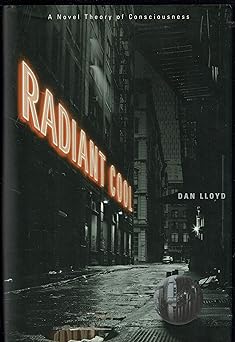 Radiant Cool: A Novel of Theory of Consciousness (Bradford Books)
 The Unthinkable Truth
 The Body in the Bookstore (A Secret Bookcase Mystery)
 Who Killed Una Lynskey?
 A Town Called Treachery
 Baker Street Irregulars: Thirteen Authors With New Takes on Sherlock Holmes
 archipelago
 The Routledge Companion to Global Chaucer (Routledge Literature Companions)
评论前必须登录!
立即登录 注册