 电子书百科大全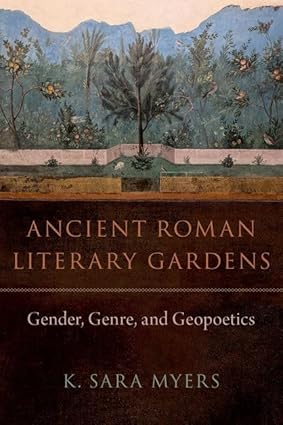
Ancient Roman Literary Gardens: Gender, Genre, and Geopoetics
by: K. Sara Myers (Author)
Publisher: Oxford University Press
Publication Date: 2024-08-16
Language: English
Print Length: 312 pages
ISBN-10: 0197773206
ISBN-13: 9780197773208
Book Description
Gardens are not central in Latin literature, but usually somewhere off to the side, as was often the real garden. They appear, however, in some form in nearly all literary genres of Latin literature–history, satire, epigrams, epics, letters, lyric poetry, elegies, and novels–and often edge their way into larger socio-economic and political discussions about Roman identity, gender, wealth, and land use. Through an analysis of ancient garden studies and close readings of major Latin texts from the first centuries BCE and CE, K. Sara Myers examines the function and representation of garden descriptions in the work of a broad range of Roman authors, such as Cicero, Catullus, Vergil, Varro, Horace, Ovid, Petronius, Columella, Statius, and Pliny the Elder and Younger.While most of the sources in this study are poetic and their gardens fictional, it is still important to situate these works in their cultural and historical contexts. By understanding how to interpret the importance of these spaces in the literature in which they appear, readers will not only better comprehend the aesthetic and ethical values of the work in question, but they will also gain a better insight into ancient Roman attitudes toward gender, art, and human relationships with nature. Myers shows how some Romans constructed the garden as a space under male control: Men are cultivators, while women are cultivated. Literary gardens can symbolize a range of positive masculine ideals and identities for elite men–from the rustic farmer to the philosopher–but can also represent unmanly luxury and leisure. Women in gardens are usually sexualized, depicted as virginal or sexually transgressive, especially when they attempt to express ownership over these spaces. In almost all these texts, the artificial and artistic arrangement of the raw material of nature invites self-reflexivity, which Myers calls “geopoetics,” or a “poetics of the earth.”
Editorial Reviews
Gardens are not central in Latin literature, but usually somewhere off to the side, as was often the real garden. They appear, however, in some form in nearly all literary genres of Latin literature–history, satire, epigrams, epics, letters, lyric poetry, elegies, and novels–and often edge their way into larger socio-economic and political discussions about Roman identity, gender, wealth, and land use. Through an analysis of ancient garden studies and close readings of major Latin texts from the first centuries BCE and CE, K. Sara Myers examines the function and representation of garden descriptions in the work of a broad range of Roman authors, such as Cicero, Catullus, Vergil, Varro, Horace, Ovid, Petronius, Columella, Statius, and Pliny the Elder and Younger.While most of the sources in this study are poetic and their gardens fictional, it is still important to situate these works in their cultural and historical contexts. By understanding how to interpret the importance of these spaces in the literature in which they appear, readers will not only better comprehend the aesthetic and ethical values of the work in question, but they will also gain a better insight into ancient Roman attitudes toward gender, art, and human relationships with nature. Myers shows how some Romans constructed the garden as a space under male control: Men are cultivators, while women are cultivated. Literary gardens can symbolize a range of positive masculine ideals and identities for elite men–from the rustic farmer to the philosopher–but can also represent unmanly luxury and leisure. Women in gardens are usually sexualized, depicted as virginal or sexually transgressive, especially when they attempt to express ownership over these spaces. In almost all these texts, the artificial and artistic arrangement of the raw material of nature invites self-reflexivity, which Myers calls “geopoetics,” or a “poetics of the earth.”

评论前必须登录!
立即登录 注册