 电子书百科大全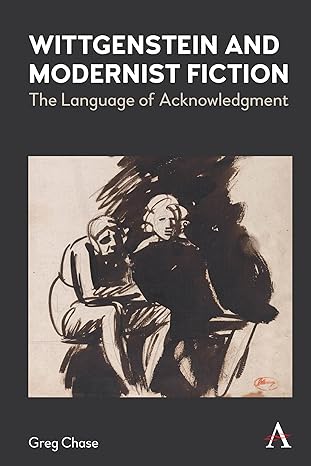
Wittgenstein and Modernist Fiction: The Language of Acknowledgment (Anthem Studies in Wittgenstein)
by: Greg Chase (Author)
Publisher: Anthem Press
Publication Date: 2022/2/8
Language: English
Print Length: 250 pages
ISBN-10: 183998063X
ISBN-13: 9781839980633
Book Description
The early decades of the twentieth century were a period of major economic and cultural upheaval across Europe and America. Scholars have typically held that novelists responded to these shifts by questioning language’s capacity to picture the world accurately. But, even as modernist novels move away from a view of language as a means of gaining knowledge, they also underscore its capacity to grant acknowledgment; they treat words as tools for recognizing and responding to the inner lives of others. This book brings out this crucial feature of modernism by engaging with the philosophy of Ludwig Wittgenstein and with Stanley Cavell’s pioneering interpretation of Wittgenstein’s thought. The book shows how Wittgenstein’s interest in acknowledgment emerges over the course of his career-long effort to grapple with the same disorienting conditions of modern life that the experimental fiction of this period registers, including world wars, industrialization, and new conceptions of sexuality. It, then, argues that modernist novels by E.M. Forster, Virginia Woolf, Nella Larsen, William Faulkner, and others exhibit a similar interest in language’s capacity to grant acknowledgment. These novels offer readers a way of hearing what Wittgenstein calls “the silent soliloquy of others,” giving us words by which we might acknowledge the otherwise unvoiced inner lives of socially marginalized figures.
About the Author
The early decades of the twentieth century were a period of major economic and cultural upheaval across Europe and America. Scholars have typically held that novelists responded to these shifts by questioning language’s capacity to picture the world accurately. But, even as modernist novels move away from a view of language as a means of gaining knowledge, they also underscore its capacity to grant acknowledgment; they treat words as tools for recognizing and responding to the inner lives of others. This book brings out this crucial feature of modernism by engaging with the philosophy of Ludwig Wittgenstein and with Stanley Cavell’s pioneering interpretation of Wittgenstein’s thought. The book shows how Wittgenstein’s interest in acknowledgment emerges over the course of his career-long effort to grapple with the same disorienting conditions of modern life that the experimental fiction of this period registers, including world wars, industrialization, and new conceptions of sexuality. It, then, argues that modernist novels by E.M. Forster, Virginia Woolf, Nella Larsen, William Faulkner, and others exhibit a similar interest in language’s capacity to grant acknowledgment. These novels offer readers a way of hearing what Wittgenstein calls “the silent soliloquy of others,” giving us words by which we might acknowledge the otherwise unvoiced inner lives of socially marginalized figures. Read more
Wittgenstein and Modernist Fiction: The Language of Acknowledgment (Anthem Studies in Wittgenstein)
未经允许不得转载:电子书百科大全 » Wittgenstein and Modernist Fiction: The Language of Acknowledgment (Anthem Studies in Wittgenstein)
相关推荐
 Radiant Cool: A Novel of Theory of Consciousness (Bradford Books)
 The Unthinkable Truth
 The Body in the Bookstore (A Secret Bookcase Mystery)
 Who Killed Una Lynskey?
 A Town Called Treachery
 Baker Street Irregulars: Thirteen Authors With New Takes on Sherlock Holmes
 archipelago
 The Routledge Companion to Global Chaucer (Routledge Literature Companions)
评论前必须登录!
立即登录 注册