 电子书百科大全
 Trust Responsibly (Routledge Studies in Epistemology)
by: Jakob Ohlhorst (Author)
Edition:1st
Publication Date: October 2, 2023
Language:English
Print Length:160 pages
ISBN-10:1032460989
ISBN-13:9781032460987
Book Description
This book offers a defence of Wrightean epistemic entitlement, one of the most prominent approaches to hinge epistemology. It also systematically explores the connections between virtue epistemology and hinge epistemology.According to hinge epistemology, any human belief set is built within and upon a framework of pre-evidential propositions – hinges – that cannot be justified. Epistemic entitlement argues that we are entitled to trust our hinges. But there remains a problem. Entitlement is inherently unconstrained and arbitrary: We can be entitled to any hinge proposition under the right circumstances. In this book, the author argues that we need a non-arbitrariness clause that protects entitlement from defeat. This clause, he argues, is to require epistemic virtue. Virtuous cognitive dispositions provide the non-arbitrariness clause that protects entitlement from defeat. The epistemic character of the agent who holds a particular set of hinges tells us something about the hinges’ epistemic status. Conversely, epistemic virtues are cognitive dispositions and capacities that rely on hinge propositions – without trusting in some hinges, we would be unable to exercise our virtues.Trust Responsibly will appeal to scholars and advanced students working on epistemology, Wittgenstein, and virtues.The Open Access version of this book, available at www.taylorfrancis.com, has been made available under a Creative Commons Attribution-Non Commercial-No Derivatives (CC-BY-NC-ND) 4.0 license.
About the Author
This book offers a defence of Wrightean epistemic entitlement, one of the most prominent approaches to hinge epistemology. It also systematically explores the connections between virtue epistemology and hinge epistemology.According to hinge epistemology, any human belief set is built within and upon a framework of pre-evidential propositions – hinges – that cannot be justified. Epistemic entitlement argues that we are entitled to trust our hinges. But there remains a problem. Entitlement is inherently unconstrained and arbitrary: We can be entitled to any hinge proposition under the right circumstances. In this book, the author argues that we need a non-arbitrariness clause that protects entitlement from defeat. This clause, he argues, is to require epistemic virtue. Virtuous cognitive dispositions provide the non-arbitrariness clause that protects entitlement from defeat. The epistemic character of the agent who holds a particular set of hinges tells us something about the hinges’ epistemic status. Conversely, epistemic virtues are cognitive dispositions and capacities that rely on hinge propositions – without trusting in some hinges, we would be unable to exercise our virtues.Trust Responsibly will appeal to scholars and advanced students working on epistemology, Wittgenstein, and virtues.The Open Access version of this book, available at www.taylorfrancis.com, has been made available under a Creative Commons Attribution-Non Commercial-No Derivatives (CC-BY-NC-ND) 4.0 license. Read more
Trust Responsibly (Routledge Studies in Epistemology)
相关推荐
 Progressive Industrial Policy in Europe
 Introducing Philosophy : Questions and Readings
 Philosophy: A Text With Readings 7th Edition
 Killer Psychopaths: The Inside Story of Criminal Profiling
 The Carbon Wave: A Story of Democracy, Parenthood, and the Race to Protect Our Planet
 The Castle: The Sunday Times Number One Bestseller
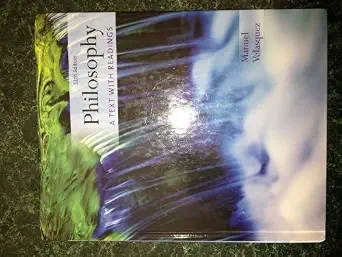 Philosophy: A Text With Readings 11th Edition
 A Feeling for Books: The Book-of-the-Month Club, Literary Taste, and Middle-Class Desire New Edition
评论前必须登录!
立即登录 注册