 电子书百科大全
Tracts of Action: Material, Visual, and Practical Dimensions of Early Modern How-to Books (Library of the Written Word / Library of the Written Word - the Handpress World)
by: Stefan Laube (Editor)
Publisher: Brill Academic Pub
Publication Date: 2024/7/17
Language: English
Print Length: 352 pages
ISBN-10: 9004683372
ISBN-13: 9789004683372
Book Description
This volume offers the user a guide to the neglected field of how-to books. How do I make soap? How do I dye textiles? What ingredients do I need for a effective remedy? How can one find and mine mineral resources, how does one make pewter cups or a good meal? Practical information of this kind, on distillation, medicine, dyeing, cosmetics, glassmaking, ceramics, metallurgy and many other subjects, flooded the book market in the first centuries of printing. As varied as these subjects are the research questions that we might ask: How do you learn practical skills from a book? Why were these books so popular, who used them and how, and can they even be considered to be a clearly defined genre? The aim of this volume, which emerged from a conference at the Herzog August Bibliothek Wolfenbüttel, is to find out which patterns characterise the genre of how-to books or "Rezepte-Büchlein". It also aims to contribute to the clarification of terms for a genre, that operates under labels such as "Books of Secrets" and "recipe books" or, in German-speaking countries, "Kunst- und Wunderbuch" or "nützlich büchlein". Some key issues addressed in the book include the traces of book use, the media shift from manuscript to print, the interaction between text and image, and the praxeological dimension of practical books. Self-help literature not only made it possible for interested laypersons to obtain information from all possible fields of knowledge, largely independent of institutional and educational environments; as "tracts for action" they differed from other genres in that they were consistently oriented towards implementation.
About the Author
This volume offers the user a guide to the neglected field of how-to books. How do I make soap? How do I dye textiles? What ingredients do I need for a effective remedy? How can one find and mine mineral resources, how does one make pewter cups or a good meal? Practical information of this kind, on distillation, medicine, dyeing, cosmetics, glassmaking, ceramics, metallurgy and many other subjects, flooded the book market in the first centuries of printing. As varied as these subjects are the research questions that we might ask: How do you learn practical skills from a book? Why were these books so popular, who used them and how, and can they even be considered to be a clearly defined genre? The aim of this volume, which emerged from a conference at the Herzog August Bibliothek Wolfenbüttel, is to find out which patterns characterise the genre of how-to books or "Rezepte-Büchlein". It also aims to contribute to the clarification of terms for a genre, that operates under labels such as "Books of Secrets" and "recipe books" or, in German-speaking countries, "Kunst- und Wunderbuch" or "nützlich büchlein". Some key issues addressed in the book include the traces of book use, the media shift from manuscript to print, the interaction between text and image, and the praxeological dimension of practical books. Self-help literature not only made it possible for interested laypersons to obtain information from all possible fields of knowledge, largely independent of institutional and educational environments; as "tracts for action" they differed from other genres in that they were consistently oriented towards implementation. Read more
Tracts of Action: Material, Visual, and Practical Dimensions of Early Modern How-to Books (Library of the Written Word / Library of the Written Word - the Handpress World)
未经允许不得转载:电子书百科大全 » Tracts of Action: Material, Visual, and Practical Dimensions of Early Modern How-to Books (Library of the Written Word / Library of the Written Word - the Handpress World)
相关推荐
 The History of Anti-Semitism, Volume 3: From Voltaire to Wagner
 International Solidarity in the Low Countries during the Twentieth Century: New Perspectives and Themes
 300 Years of the French in Old Mines: A Narrative History of the Oldest Village in Missouri
 Escape from the Pit: A Woman's Resistance in Nazi-occupied Poland, 1939-1943 (Excelsior Editions)
 Alexandrine Teaching on the Universe (Routledge Revivals)
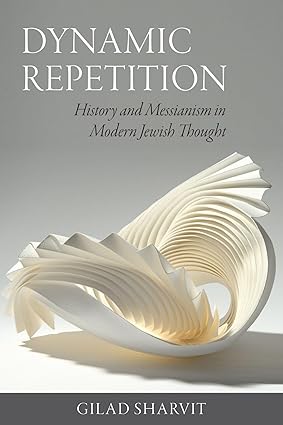 Dynamic Repetition: History and Messianism in Modern Jewish Thought (The Tauber Institute Series for the Study of European Jewry)
 The Latin Continuation of William of Tyre (Crusade Texts in Translation)
 Shmuel Hugo Bergmann: A Life between Prague and Jerusalem (Europäisch-jüdische Studien – Beiträge, 63)
评论前必须登录!
立即登录 注册