 电子书百科大全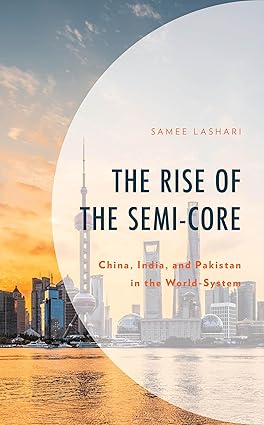
The Rise of the Semi-Core: China, India, and Pakistan in the World-System
by: Samee Lashari (Author)
Publisher: Lexington Books
Publication Date: 2024/6/7
Language: English
Print Length: 358 pages
ISBN-10: 1666942863
ISBN-13: 9781666942866
Book Description
Since its establishment in Europe, capitalism has witnessed a shift in global politico-economic power dynamics. Some nations ascended to dominate the world economy, while others fell from prominence to poverty. This transformation was particularly evident in the case of China and India, which were once central to the pre-modern global economy with their respective empires but transitioned into peripheries of the capitalist world trade structure. These regions experienced occupation, colonization, de-industrialization, and resource exploitation for the industrialization and modernization of core countries, primarily Western Europe and the United States.The Rise of the Semi-Core: China, India, and Pakistan in the World-System delves into modern capitalist history, unraveling the increasing complexities that give rise to the emergence of a semi-core. It argues that nations must possess both economic and strategic national powers to maintain their hierarchical position within the capitalist world-system. Western powers of the eighteenth century, equipped with superior military capabilities, expanded their dominion globally, including in China and India, converting these regions into peripheries that served the core's interests in terms of raw material provision, product consumption, and facilitating capital flow. Once decolonized, China and India initially adopted a statist model of development, nevertheless these nations could grow only when they aligned with core interests.
About the Author
Since its establishment in Europe, capitalism has witnessed a shift in global politico-economic power dynamics. Some nations ascended to dominate the world economy, while others fell from prominence to poverty. This transformation was particularly evident in the case of China and India, which were once central to the pre-modern global economy with their respective empires but transitioned into peripheries of the capitalist world trade structure. These regions experienced occupation, colonization, de-industrialization, and resource exploitation for the industrialization and modernization of core countries, primarily Western Europe and the United States.The Rise of the Semi-Core: China, India, and Pakistan in the World-System delves into modern capitalist history, unraveling the increasing complexities that give rise to the emergence of a semi-core. It argues that nations must possess both economic and strategic national powers to maintain their hierarchical position within the capitalist world-system. Western powers of the eighteenth century, equipped with superior military capabilities, expanded their dominion globally, including in China and India, converting these regions into peripheries that served the core's interests in terms of raw material provision, product consumption, and facilitating capital flow. Once decolonized, China and India initially adopted a statist model of development, nevertheless these nations could grow only when they aligned with core interests. Read more
The Rise of the Semi-Core: China, India, and Pakistan in the World-System
相关推荐
 The Man Who Invented Fiction: How Cervantes Ushered in the Modern World Reprint Edition
 What We Keep Forgetting About Technology: Lessons for Digital Innovators
 The War on Reality: Recovering Truth in a World That Celebrates Lies
 Progressive Industrial Policy in Europe
 Introducing Philosophy : Questions and Readings
 Philosophy: A Text With Readings 7th Edition
 Killer Psychopaths: The Inside Story of Criminal Profiling
 The Carbon Wave: A Story of Democracy, Parenthood, and the Race to Protect Our Planet
评论前必须登录!
立即登录 注册