 电子书百科大全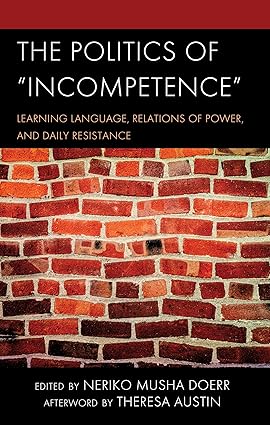
The Politics of Incompetence: Learning Language, Relations of Power, and Daily Resistance
by: Neriko Musha Doerr Ramapo College (Editor, Contributor),Theresa Austin(Afterword),Cori Jakubiak(Contributor),Keiko Konoeda(Contributor),Yuri Kumagai(Contributor)
Publisher: Lexington Books
Publication Date: 2024/6/24
Language: English
Print Length: 194 pages
ISBN-10: 1666936235
ISBN-13: 9781666936230
Book Description
“Incompetence” is not an objective state lacking competence nor a kind of deficiency that needs to be filled. Rather, it is a constructed state that is productive, working in tandem with its opposite, “competence.” Perception of incompetence/competence works as what Michel Foucault (1977) calls a technology of “normalization” that pushes individuals to aspire to follow a shared norm, while hierarchically differentiating individuals according to their proximity to the aspired norm. The notion of incompetence is thus “productive” in that it turns individuals into specific kinds of “subjects” (Foucault 1977). The Politics of “Incompetence”: Learning Language, Relations of Power, and Daily Resistance further investigates other productive processes around the perception of “incompetence” specifically through its intersections with various ideologies—“academic achievement,” teacher-student hierarchy, “native speaker” ideology, normative unit thinking, and privilege of vulnerability—as such intersections generate new knowledge, new reflection on one’s assumptions and privilege, new space for marginalized language, and more. This volume opens up a new area of study—productive cultural politics of “incompetence”—by focusing on language learning in diverse contexts: Japanese as a Foreign Language classrooms in US colleges, Italian language tourism in Italy, and indigenous Māori language revitalization at an Aotearoa/New Zealand school.
About the Author
“Incompetence” is not an objective state lacking competence nor a kind of deficiency that needs to be filled. Rather, it is a constructed state that is productive, working in tandem with its opposite, “competence.” Perception of incompetence/competence works as what Michel Foucault (1977) calls a technology of “normalization” that pushes individuals to aspire to follow a shared norm, while hierarchically differentiating individuals according to their proximity to the aspired norm. The notion of incompetence is thus “productive” in that it turns individuals into specific kinds of “subjects” (Foucault 1977). The Politics of “Incompetence”: Learning Language, Relations of Power, and Daily Resistance further investigates other productive processes around the perception of “incompetence” specifically through its intersections with various ideologies—“academic achievement,” teacher-student hierarchy, “native speaker” ideology, normative unit thinking, and privilege of vulnerability—as such intersections generate new knowledge, new reflection on one’s assumptions and privilege, new space for marginalized language, and more. This volume opens up a new area of study—productive cultural politics of “incompetence”—by focusing on language learning in diverse contexts: Japanese as a Foreign Language classrooms in US colleges, Italian language tourism in Italy, and indigenous Māori language revitalization at an Aotearoa/New Zealand school. Read more
The Politics of Incompetence: Learning Language, Relations of Power, and Daily Resistance
未经允许不得转载:电子书百科大全 » The Politics of Incompetence: Learning Language, Relations of Power, and Daily Resistance
相关推荐
![ACT Prep Book 2024-2025 with Practice Tests - 3 Full-Length Exams, 250+ Online Video Tutorials, ACT Secrets Study Guide for the English, Math, Reading, Science, and Writing Sections: [8th Edition]-电子书百科大全](https://m.media-amazon.com/images/I/71JyQRiAusL._SY425_.jpg) ACT Prep Book 2024-2025 with Practice Tests - 3 Full-Length Exams, 250+ Online Video Tutorials, ACT Secrets Study Guide for the English, Math, Reading, Science, and Writing Sections: [8th Edition]
ACT Prep Book 2024-2025 with Practice Tests - 3 Full-Length Exams, 250+ Online Video Tutorials, ACT Secrets Study Guide for the English, Math, Reading, Science, and Writing Sections: [8th Edition] Keepers of the Stones and Stars
 The Super Easy Teen Baking Cookbook: 60 Simple Step-by-Step Recipes (Super Easy Teen Cookbooks)
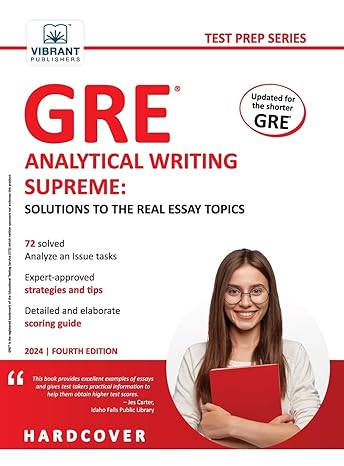 GRE Analytical Writing Supreme: Solutions to the Real Essay Topics
 5 Steps to a 5: AP Computer Science Principles 2023
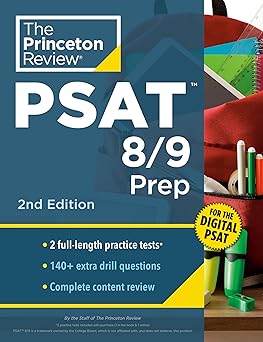 Princeton Review PSAT 8/9 Prep, 2nd Edition: 2 Practice Tests + Content Review + Strategies for the Digital PSAT 8/9 (College Test Preparation)
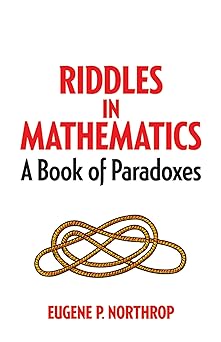 Riddles in Mathematics: A Book of Paradoxes (Dover Math Games & Puzzles)
 AP Computer Science A Premium, 12th Edition: Prep Book with 6 Practice Tests + Comprehensive Review + Online Practice (Barron's AP Prep)
评论前必须登录!
立即登录 注册