 电子书百科大全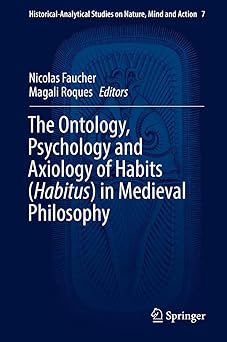
The Ontology, Psychology and Axiology of Habits (Habitus) in Medieval Philosophy (Historical-Analytical Studies on Nature, Mind and Action, 7)
by: Nicolas Faucher (Editor),Magali Roques (Editor)
Publisher: Springer
Edition: 1st ed. 2018
Publication Date: 2019/1/22
Language: English
Print Length: 422 pages
ISBN-10: 3030002349
ISBN-13: 9783030002343
Book Description
This book features 20 essays that explore how Latin medieval philosophers and theologians from Anselm to Buridan conceived of habitus, as well as detailed studies of the use of the concept by Augustine and of the reception of the medieval doctrines of habitus in Suàrez and Descartes. Habitus are defined as stable dispositions to act or think in a certain way. This definition was passed down to the medieval thinkers from Aristotle and, to a lesser extent, Augustine, and played a key role in many of the philosophical and theological developments of the time.Written by leading experts in medieval and modern philosophy, the book offers a historical overview that examines the topic in light of recent advances in medieval cognitive psychology and medieval moral theory. Coverage includes such topics as the metaphysics of the soul, the definition of virtue and vice, and the epistemology of self-knowledge. The book also contains an introduction that is the first attempt at a comprehensive survey of the nature and function of habitus in medieval thought.The material will appeal to a wide audience of historians of philosophy and contemporary philosophers. It is relevant as much to the historian of ancient philosophy who wants to track the historical reception of Aristotelian ideas as it is to historians of modern philosophy who would like to study the progressive disappearance of the term “habitus” in the early modern period and the concepts that were substituted for it. In addition, the volume will also be of interest to contemporary philosophers open to historical perspectives in order to renew current trends in cognitive psychology, virtue epistemology, and virtue ethics.
About the Author
This book features 20 essays that explore how Latin medieval philosophers and theologians from Anselm to Buridan conceived of habitus, as well as detailed studies of the use of the concept by Augustine and of the reception of the medieval doctrines of habitus in Suàrez and Descartes. Habitus are defined as stable dispositions to act or think in a certain way. This definition was passed down to the medieval thinkers from Aristotle and, to a lesser extent, Augustine, and played a key role in many of the philosophical and theological developments of the time.Written by leading experts in medieval and modern philosophy, the book offers a historical overview that examines the topic in light of recent advances in medieval cognitive psychology and medieval moral theory. Coverage includes such topics as the metaphysics of the soul, the definition of virtue and vice, and the epistemology of self-knowledge. The book also contains an introduction that is the first attempt at a comprehensive survey of the nature and function of habitus in medieval thought.The material will appeal to a wide audience of historians of philosophy and contemporary philosophers. It is relevant as much to the historian of ancient philosophy who wants to track the historical reception of Aristotelian ideas as it is to historians of modern philosophy who would like to study the progressive disappearance of the term “habitus” in the early modern period and the concepts that were substituted for it. In addition, the volume will also be of interest to contemporary philosophers open to historical perspectives in order to renew current trends in cognitive psychology, virtue epistemology, and virtue ethics. Read more
The Ontology, Psychology and Axiology of Habits (Habitus) in Medieval Philosophy (Historical-Analytical Studies on Nature, Mind and Action, 7)
未经允许不得转载:电子书百科大全 » The Ontology, Psychology and Axiology of Habits (Habitus) in Medieval Philosophy (Historical-Analytical Studies on Nature, Mind and Action, 7)
相关推荐
 Introducing Philosophy : Questions and Readings
 Philosophy: A Text With Readings 7th Edition
 Killer Psychopaths: The Inside Story of Criminal Profiling
 The Carbon Wave: A Story of Democracy, Parenthood, and the Race to Protect Our Planet
 The Castle: The Sunday Times Number One Bestseller
 Philosophy: A Text With Readings 11th Edition
 A Feeling for Books: The Book-of-the-Month Club, Literary Taste, and Middle-Class Desire New Edition
 Society in the Digital Age: An Interactionist Perspective
评论前必须登录!
立即登录 注册