 电子书百科大全
Revolutionary Warfare: How the Algerian War Made Modern Counterinsurgency (Battlegrounds: Cornell Studies in Military History)
by: Terrence G. Peterson (Author)
Publisher: Cornell University Press
Publication Date: 2024/9/15
Language: English
Print Length: 240 pages
ISBN-10: 1501776967
ISBN-13: 9781501776960
Book Description
Revolutionary Warfare investigates how efforts to counter a revolution could also be revolutionary. The Algerian War fractured the French Empire, destroyed the legitimacy of colonial rule, and helped launch the Third Worldist movement for the liberation of the Global South. By tracing how French generals, officers, and civil officials sought to counter Algerian independence with their own project of radical social transformation, Terrence G. Peterson reveals that the conflict also helped to transform the nature of modern warfare.The French war effort was never defined solely by repression. As Peterson details, it also sought to fashion new forms of surveillance and social control that could capture the loyalty of Algerians and transform Algerian society. Hygiene and medical aid efforts, youth sports and education programs, and psychological warfare campaigns all attempted to remake Algerian social structures and bind them more closely to the French state. In tracing the emergence of such programs, Peterson reframes the French war effort as a project of armed social reform that sought not to preserve colonial rule unchanged, but to revolutionize it in order to preserve it against the global challenges of decolonization. Revolutionary Warfare demonstrates how French officers' efforts to transform warfare into an exercise in social engineering not only shaped how the Algerian War unfolded from its earliest months, but also helped to forge a paradigm of warfare that dominated strategic thinking during the Cold War and after: counterinsurgency.
About the Author
Revolutionary Warfare investigates how efforts to counter a revolution could also be revolutionary. The Algerian War fractured the French Empire, destroyed the legitimacy of colonial rule, and helped launch the Third Worldist movement for the liberation of the Global South. By tracing how French generals, officers, and civil officials sought to counter Algerian independence with their own project of radical social transformation, Terrence G. Peterson reveals that the conflict also helped to transform the nature of modern warfare.The French war effort was never defined solely by repression. As Peterson details, it also sought to fashion new forms of surveillance and social control that could capture the loyalty of Algerians and transform Algerian society. Hygiene and medical aid efforts, youth sports and education programs, and psychological warfare campaigns all attempted to remake Algerian social structures and bind them more closely to the French state. In tracing the emergence of such programs, Peterson reframes the French war effort as a project of armed social reform that sought not to preserve colonial rule unchanged, but to revolutionize it in order to preserve it against the global challenges of decolonization. Revolutionary Warfare demonstrates how French officers' efforts to transform warfare into an exercise in social engineering not only shaped how the Algerian War unfolded from its earliest months, but also helped to forge a paradigm of warfare that dominated strategic thinking during the Cold War and after: counterinsurgency. Read more
Revolutionary Warfare: How the Algerian War Made Modern Counterinsurgency (Battlegrounds: Cornell Studies in Military History)
未经允许不得转载:电子书百科大全 » Revolutionary Warfare: How the Algerian War Made Modern Counterinsurgency (Battlegrounds: Cornell Studies in Military History)
相关推荐
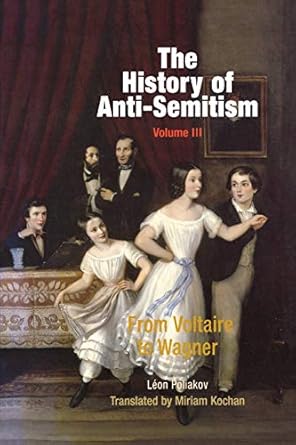 The History of Anti-Semitism, Volume 3: From Voltaire to Wagner
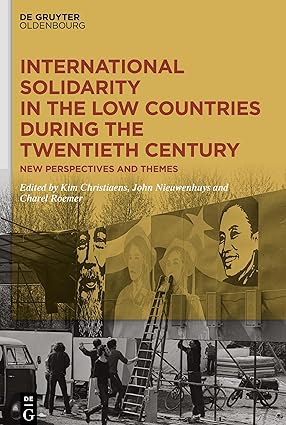 International Solidarity in the Low Countries during the Twentieth Century: New Perspectives and Themes
 300 Years of the French in Old Mines: A Narrative History of the Oldest Village in Missouri
 Escape from the Pit: A Woman's Resistance in Nazi-occupied Poland, 1939-1943 (Excelsior Editions)
 Alexandrine Teaching on the Universe (Routledge Revivals)
 Dynamic Repetition: History and Messianism in Modern Jewish Thought (The Tauber Institute Series for the Study of European Jewry)
 The Latin Continuation of William of Tyre (Crusade Texts in Translation)
 Shmuel Hugo Bergmann: A Life between Prague and Jerusalem (Europäisch-jüdische Studien – Beiträge, 63)
评论前必须登录!
立即登录 注册