 电子书百科大全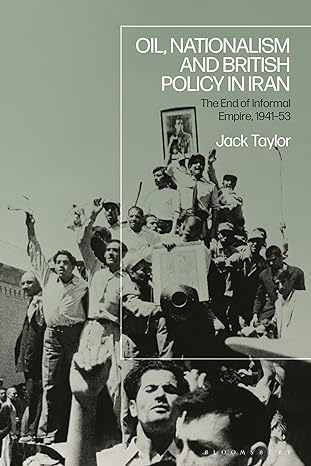
Oil, Nationalism and British Policy in Iran: The End of Informal Empire, 1941-53
by: Jack Taylor (Author)
Publisher: Bloomsbury Academic
Publication Date: 2024/1/25
Language: English
Print Length: 236 pages
ISBN-10: 1350320587
ISBN-13: 9781350320581
Book Description
As new nations were formed from the declining British Empire, a murky world of diplomats, oil executives and spies were determined to maintain London’s grip on Iran and its strategic oil reserves. Directed from Whitehall by successive governments, this book explores the complexities and ambiguities of British policy in Iran and demonstrates its centrality to post-war imperial reorientation. Situating Iran within Britain’s ‘informal empire,’ Jack Taylor demonstrates that Clement Attlee’s Labour Government saw Iranian oil as critical to the construction of a domestic New Jerusalem, and used coercion, propaganda, and espionage to preserve their control over it. In doing so, they were forced to confront not only the emerging Cold War, but local resistance expressed through diverse forms including trade unionism, Soviet-inspired Marxism, and popular nationalism. Oil, Nationalism and British Policy in Iran offers new insight into the scale of British interference in Iran and its ultimate failure. It reveals that as London’s policy floundered the United States independently took steps to safeguard their own regional economic and security interests. Although British actors were critical in the operation to depose Prime Minister Mohammad Mossadegh following his government’s nationalisation of the oil industry, they were ultimately unable to sustain their informal empire in Iran.
About the Author
As new nations were formed from the declining British Empire, a murky world of diplomats, oil executives and spies were determined to maintain London’s grip on Iran and its strategic oil reserves. Directed from Whitehall by successive governments, this book explores the complexities and ambiguities of British policy in Iran and demonstrates its centrality to post-war imperial reorientation. Situating Iran within Britain’s ‘informal empire,’ Jack Taylor demonstrates that Clement Attlee’s Labour Government saw Iranian oil as critical to the construction of a domestic New Jerusalem, and used coercion, propaganda, and espionage to preserve their control over it. In doing so, they were forced to confront not only the emerging Cold War, but local resistance expressed through diverse forms including trade unionism, Soviet-inspired Marxism, and popular nationalism. Oil, Nationalism and British Policy in Iran offers new insight into the scale of British interference in Iran and its ultimate failure. It reveals that as London’s policy floundered the United States independently took steps to safeguard their own regional economic and security interests. Although British actors were critical in the operation to depose Prime Minister Mohammad Mossadegh following his government’s nationalisation of the oil industry, they were ultimately unable to sustain their informal empire in Iran. Read more
Oil, Nationalism and British Policy in Iran: The End of Informal Empire, 1941-53
相关推荐
 Lessons on Living: Finding Your Way Through Life's Ups and Downs from the respected New Zealand psychologist and bestselling author
 Ignite Your Yoga: How to Live, Practice, and Teach as an Authentic Yoga Steward
 Childhood: A memoir of growing up, parenting, teaching, and discovering what children need most
 The Artificial Intelligence Contagion: Can Democracy Withstand the Imminent Transformation of Work, Wealth and the Social Order?
 Collective Action Theory and Empirical Evidence 2010th Edition
 Prom Night: Youth, Schools and Popular Culture
 Modern Interpretations of Traditional Chinese Culture
 The Psychology of Pan-Africanism: Between Illusion and Liberation
评论前必须登录!
立即登录 注册