 电子书百科大全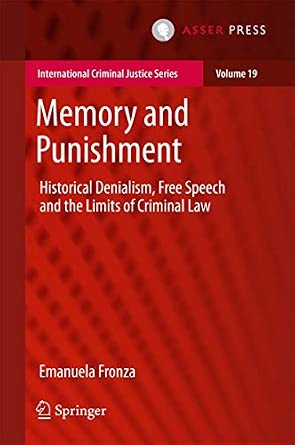
Memory and Punishment: Historical Denialism, Free Speech and the Limits of Criminal Law: 19 1st ed. 2018 Edition
Author(s): Emanuela Fronza (Author)
- Publisher: T.M.C. Asser Press
- Publication Date: 8 Mar. 2018
- Edition: 1st ed. 2018
- Language: English
- Print length: 256 pages
- ISBN-10: 9462652333
- ISBN-13: 9789462652330
Book Description
This book examines the criminalisation of denials of genocide and of other mass atrocities in Europe and discusses the implications of protecting institutional historical memory through criminal law.
The analysis highlights the tensions with free speech, investigating the relationship between criminal law and historical memory. The book paves the way for a broader discussion about fake news, ‘post-truth’ scenarios, and free expression in a digital world. The author underscores the need to protect well-founded factual records from the dangers of misinformation. Historical denialism and the related jurisprudence represent a key step in exploring this complex field.
The book combines an interdisciplinary approach with criminal law methodology. It is primarily aimed at academics, practitioners and others who wish to deepen their understanding of historical denialism, remembrance laws, ‘speech crimes’ and freedom of expression. Emanuela Fronza is Senior Research Fellow in Criminal Law and Lecturer in International and European Criminal Law at the School of Law, University of Bologna. She is a Principal Investigator within the EU research consortium Memory Laws in European and Comparative Perspectives funded by HERA (Humanities in the European Research Area).
The analysis highlights the tensions with free speech, investigating the relationship between criminal law and historical memory. The book paves the way for a broader discussion about fake news, ‘post-truth’ scenarios, and free expression in a digital world. The author underscores the need to protect well-founded factual records from the dangers of misinformation. Historical denialism and the related jurisprudence represent a key step in exploring this complex field.
The book combines an interdisciplinary approach with criminal law methodology. It is primarily aimed at academics, practitioners and others who wish to deepen their understanding of historical denialism, remembrance laws, ‘speech crimes’ and freedom of expression. Emanuela Fronza is Senior Research Fellow in Criminal Law and Lecturer in International and European Criminal Law at the School of Law, University of Bologna. She is a Principal Investigator within the EU research consortium Memory Laws in European and Comparative Perspectives funded by HERA (Humanities in the European Research Area).
Editorial Reviews
From the Back Cover
This book examines the criminalisation of denials of genocide and of other massatrocities in Europe and discusses the implications of protecting institutional historicalmemory through criminal law.
The analysis highlights the tensions with free speech, investigating the relationshipbetween criminal law and historical memory. The book paves the way for a broaderdiscussion about fake news, ‘post-truth’ scenarios, and free expression in a digital world. The author underscores the need to protect well-founded factual records fromthe dangers of misinformation. Historical denialism and the related jurisprudencerepresent a key step in exploring this complex field.
The book combines an interdisciplinary approach with criminal law methodology.It is primarily aimed at academics, practitioners and others who wish to deepentheir understanding of historical denialism, remembrance laws, ‘speech crimes’ and freedom of expression.
Emanuela Fronza is Senior Research Fellow in Criminal Law and Lecturer in Internationaland European Criminal Law at the School of Law, University of Bologna.She is a Principal Investigator within the EU research consortium Memory Lawsin European and Comparative Perspectives funded by HERA (Humanities in theEuropean Research Area).
The analysis highlights the tensions with free speech, investigating the relationshipbetween criminal law and historical memory. The book paves the way for a broaderdiscussion about fake news, ‘post-truth’ scenarios, and free expression in a digital world. The author underscores the need to protect well-founded factual records fromthe dangers of misinformation. Historical denialism and the related jurisprudencerepresent a key step in exploring this complex field.
The book combines an interdisciplinary approach with criminal law methodology.It is primarily aimed at academics, practitioners and others who wish to deepentheir understanding of historical denialism, remembrance laws, ‘speech crimes’ and freedom of expression.
Emanuela Fronza is Senior Research Fellow in Criminal Law and Lecturer in Internationaland European Criminal Law at the School of Law, University of Bologna.She is a Principal Investigator within the EU research consortium Memory Lawsin European and Comparative Perspectives funded by HERA (Humanities in theEuropean Research Area).


评论前必须登录!
立即登录 注册