 电子书百科大全
 Lucretius and the Language of Nature (Oxford Classical Monographs)
by: Barnaby Taylor (Author)
Publisher:Oxford University Press
Publication Date: August 5, 2020
Language:English
Print Length:236 pages
ISBN-10:0198754906
ISBN-13:9780198754909
Book Description
Lucretius' Epicurean poem De Rerum Natura ('On the Nature of Things'), written in the middle of the first century BC, made a fundamental and lasting contribution to the language of Latin philosophy. The style of De Rerum Natura is like nothing else in extant Latin: at once archaic and modern, Romanizing and Hellenizing, intimate and sublime, it draws on multiple literary genres and linguistic registers. This book offers a study of Lucretius' linguistic innovation and creativity. Lucretius is depicted as a linguistic trailblazer, extending and augmenting the technical language of Latin in order to describe the Epicurean universe of atoms and void in all its complexity and sublimity. A detailed understanding of the Epicurean linguistic theory brings with it a greater appreciation of Lucretius' own language. Accordingly, this book features an in-depth reconstruction of certain core features of Epicurean linguistic theory. Elements of Lucretius' style discussed include his attitudes to, and use of, figurative language (especially metaphor); his explorations, both explicit and implicit, of Latin etymology; his uses of Greek; and his creative deployment of compounds and prefixed words. His practice is related throughout not only to the underlying Epicurean theory but also to contemporary Roman attitudes to style and language. The result is a new reading of one of the greatest and most difficult works to survive from the Roman world.
About the Author
Lucretius' Epicurean poem De Rerum Natura ('On the Nature of Things'), written in the middle of the first century BC, made a fundamental and lasting contribution to the language of Latin philosophy. The style of De Rerum Natura is like nothing else in extant Latin: at once archaic and modern, Romanizing and Hellenizing, intimate and sublime, it draws on multiple literary genres and linguistic registers. This book offers a study of Lucretius' linguistic innovation and creativity. Lucretius is depicted as a linguistic trailblazer, extending and augmenting the technical language of Latin in order to describe the Epicurean universe of atoms and void in all its complexity and sublimity. A detailed understanding of the Epicurean linguistic theory brings with it a greater appreciation of Lucretius' own language. Accordingly, this book features an in-depth reconstruction of certain core features of Epicurean linguistic theory. Elements of Lucretius' style discussed include his attitudes to, and use of, figurative language (especially metaphor); his explorations, both explicit and implicit, of Latin etymology; his uses of Greek; and his creative deployment of compounds and prefixed words. His practice is related throughout not only to the underlying Epicurean theory but also to contemporary Roman attitudes to style and language. The result is a new reading of one of the greatest and most difficult works to survive from the Roman world. Read more
Lucretius and the Language of Nature (Oxford Classical Monographs)
相关推荐
 Progressive Industrial Policy in Europe
 Introducing Philosophy : Questions and Readings
 Philosophy: A Text With Readings 7th Edition
 Killer Psychopaths: The Inside Story of Criminal Profiling
 The Carbon Wave: A Story of Democracy, Parenthood, and the Race to Protect Our Planet
 The Castle: The Sunday Times Number One Bestseller
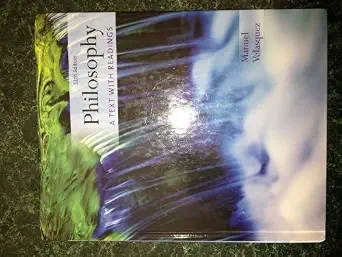 Philosophy: A Text With Readings 11th Edition
 A Feeling for Books: The Book-of-the-Month Club, Literary Taste, and Middle-Class Desire New Edition
评论前必须登录!
立即登录 注册