 电子书百科大全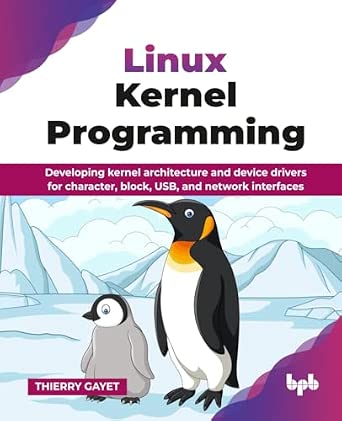
Linux Kernel Programming: Developing kernel architecture and device drivers for character, block, USB, and network interfaces
Author(s): THIERRY GAYET (Author)
- Publisher: BPB Publications
- Publication Date: 11 Jun. 2025
- Language: English
- Print length: 462 pages
- ISBN-10: 936589736X
- ISBN-13: 9789365897364
Book Description
Linus Torvald released the first version of a kernel in 1991, inspired at the time by both proprietary Unix and the Minix system. Thirty-four years later, this system has evolved with stability and robustness, making it almost indispensable for the DevSecOps community. The Linux kernel forms the robust core of countless systems, from embedded devices to vast data centers, driving unparalleled power and flexibility. This book is your essential guide to deeply understanding this fundamental component and mastering the art of developing high-performance kernel-level code
This book meticulously details the kernel's history, architectural evolution, and custom build processes. You will master device driver fundamentals, distinguishing user from kernel space, and understanding the Linux Device Model (LDM). It explores Linux Security Modules, intricate kernel memory management, and various vital communication interfaces like I2C, SPI, SERIAL, PCI, and RTC. The guide concludes with task/process management, real-time concepts, and essential kernel debugging and profiling.
By the end of this book, you will be well-equipped to confidently develop, optimize, and debug kernel-level code. This empowers you to build custom Linux systems, craft efficient device drivers, and troubleshoot complex issues, ready to tackle advanced Linux system programming challenges. You will also be able to better understand this system and develop your own drivers or low-level developments for it.
What you will learn
● GNU/Linux kernel history, feature evolution, and licensing.
● Understand and develop your character and block drivers.
● Develop new file systems.
● Manage your systems by communicating with the USB protocol.
● Debug your drivers, your kernel, or any other module in the kernel space.
● Understand the layout of the Linux device model.
● Memory management in the kernel, as well as via DMA or NUMA.
● Implement Linux Security Modules (LSM) and Netfilter stack hooks.
Who this book is for
This book is for software engineers looking to understand the Linux kernel’s architecture, modify it, and develop custom modules. It also supports project managers, team leaders, and technical managers seeking a clear view of kernel development and capabilities. CISOs and IT managers will benefit from insights into kernel limitations, vulnerabilities, and security measures, such as Linux Security Modules (LSMs).
Table of Contents
1. History of the GNU/Linux Kernel
2. Introduction to the Linux Kernel
3. Introduction to Device Drivers
4. Linux Device Model
5. Character Device Drivers
6. Block Drivers and Virtual Filesystem
7. USB Drivers and libusb
8. Network Drivers
9. Linux Security Modules
10. Kernel Memory and DMA
11. Navigating Linux Communication Interfaces
12. Process Management
13. Debugging GNU/Linux Kernel and Drivers


评论前必须登录!
立即登录 注册