 电子书百科大全
Handbook of Combinatorial Optimization
by: Ding-Zhu Du (Author),Panos M. Pardalos(Author)
Publisher: Springer
Edition: 1998th
Publication Date: 1998/10/31
Language: English
Print Length: 2430 pages
ISBN-10: 0792350197
ISBN-13: 9780792350194
Book Description
Combinatorial (or discrete) optimization is one of the most active fields in the interface of operations research, computer science, and applied math ematics. Combinatorial optimization problems arise in various applications, including communications network design, VLSI design, machine vision, air line crew scheduling, corporate planning, computer-aided design and man ufacturing, database query design, cellular telephone frequency assignment, constraint directed reasoning, and computational biology. Furthermore, combinatorial optimization problems occur in many diverse areas such as linear and integer programming, graph theory, artificial intelligence, and number theory. All these problems, when formulated mathematically as the minimization or maximization of a certain function defined on some domain, have a commonality of discreteness. Historically, combinatorial optimization starts with linear programming. Linear programming has an entire range of important applications including production planning and distribution, personnel assignment, finance, alloca tion of economic resources, circuit simulation, and control systems. Leonid Kantorovich and Tjalling Koopmans received the Nobel Prize (1975) for their work on the optimal allocation of resources. Two important discover ies, the ellipsoid method (1979) and interior point approaches (1984) both provide polynomial time algorithms for linear programming. These algo rithms have had a profound effect in combinatorial optimization. Many polynomial-time solvable combinatorial optimization problems are special cases of linear programming (e.g. matching and maximum flow). In addi tion, linear programming relaxations are often the basis for many approxi mation algorithms for solving NP-hard problems (e.g. dualheuristics).
About the Author
Combinatorial (or discrete) optimization is one of the most active fields in the interface of operations research, computer science, and applied math ematics. Combinatorial optimization problems arise in various applications, including communications network design, VLSI design, machine vision, air line crew scheduling, corporate planning, computer-aided design and man ufacturing, database query design, cellular telephone frequency assignment, constraint directed reasoning, and computational biology. Furthermore, combinatorial optimization problems occur in many diverse areas such as linear and integer programming, graph theory, artificial intelligence, and number theory. All these problems, when formulated mathematically as the minimization or maximization of a certain function defined on some domain, have a commonality of discreteness. Historically, combinatorial optimization starts with linear programming. Linear programming has an entire range of important applications including production planning and distribution, personnel assignment, finance, alloca tion of economic resources, circuit simulation, and control systems. Leonid Kantorovich and Tjalling Koopmans received the Nobel Prize (1975) for their work on the optimal allocation of resources. Two important discover ies, the ellipsoid method (1979) and interior point approaches (1984) both provide polynomial time algorithms for linear programming. These algo rithms have had a profound effect in combinatorial optimization. Many polynomial-time solvable combinatorial optimization problems are special cases of linear programming (e.g. matching and maximum flow). In addi tion, linear programming relaxations are often the basis for many approxi mation algorithms for solving NP-hard problems (e.g. dualheuristics). Read more
Handbook of Combinatorial Optimization
未经允许不得转载:电子书百科大全 » Handbook of Combinatorial Optimization
相关推荐
 Contemporary Advancement in Evolutionary Multi-objective Optimization
 Nonlinear Functional Analysis Softcover Reprint of the Original 1st 1985 ed. Edition
 Sequential Experiments with Primes Softcover Reprint of the Original 1st 2017 ed. Edition
 Algebra and Discrete Mathematics for Economics: Numbers, Graphs and Matrices in Input-Output Economics
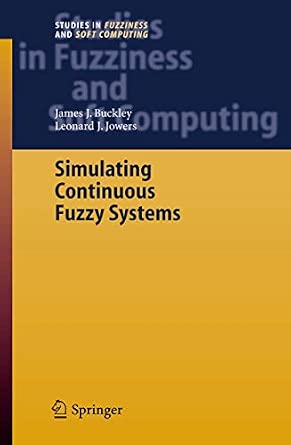 Simulating Continuous Fuzzy Systems
 Quantenmechanik (nicht nur) für Lehramtsstudierende: Theoretische Grundlagen für die Lehre sowie Anwendungen in der Philosophie und Geschichte der Physik 2. Auflage 2026 Edition
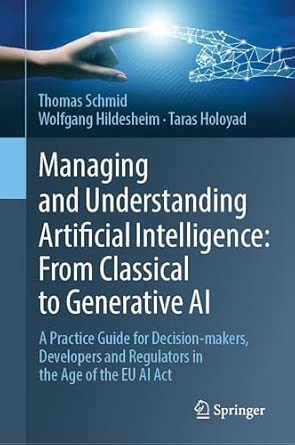 Managing and Understanding Artificial Intelligence: From Classical to Generative AI: A Practice Guide for Decision-makers, Developers and Regulators in the Age of the EU AI Act
 Diskrete Mathematik: Differenzen, Graphen, Spielpläne, Lineare Optimierung (De Gruyter Studium)
评论前必须登录!
立即登录 注册