 电子书百科大全
Friedrich Rosen: Orientalist Scholarship and International Politics
by: Amir Theilhaber (Author)
Publisher: De Gruyter Oldenbourg
Publication Date: 2020/9/7
Language: English
Print Length: 635 pages
ISBN-10: 3110639254
ISBN-13: 9783110639254
Book Description
The German lacuna in Edward Said’s 'Orientalism' has produced varied studies of German cultural and academic Orientalisms. So far the domains of German politics and scholarship have not been conflated to probe the central power/knowledge nexus of Said’s argument. Seeking to fill this gap, the diplomatic career and scholarly-literary productions of the centrally placed Friedrich Rosen serve as a focal point to investigate how politics influenced knowledge generated about the “Orient” and charts the roles knowledge played in political decision-making regarding extra-European regions. This is pursued through analyses of Germans in British imperialist contexts, cultures of lowly diplomatic encounters in Middle Eastern cities, Persian poetry in translation, prestigious Orientalist congresses in northern climes, leveraging knowledge in high-stakes diplomatic encounters, and the making of Germany’s Islam policy up to the Great War. Politics drew on bodies of knowledge and could promote or hinder scholarship. Yet, scholars never systemically followed empire in its tracks but sought their own paths to cognition. On their own terms or influenced by “Oriental” savants they aligned with politics or challenged claims to conquest and rule.
About the Author
The German lacuna in Edward Said’s 'Orientalism' has produced varied studies of German cultural and academic Orientalisms. So far the domains of German politics and scholarship have not been conflated to probe the central power/knowledge nexus of Said’s argument. Seeking to fill this gap, the diplomatic career and scholarly-literary productions of the centrally placed Friedrich Rosen serve as a focal point to investigate how politics influenced knowledge generated about the “Orient” and charts the roles knowledge played in political decision-making regarding extra-European regions. This is pursued through analyses of Germans in British imperialist contexts, cultures of lowly diplomatic encounters in Middle Eastern cities, Persian poetry in translation, prestigious Orientalist congresses in northern climes, leveraging knowledge in high-stakes diplomatic encounters, and the making of Germany’s Islam policy up to the Great War. Politics drew on bodies of knowledge and could promote or hinder scholarship. Yet, scholars never systemically followed empire in its tracks but sought their own paths to cognition. On their own terms or influenced by “Oriental” savants they aligned with politics or challenged claims to conquest and rule. Read more
Friedrich Rosen: Orientalist Scholarship and International Politics
相关推荐
 The History of Anti-Semitism, Volume 3: From Voltaire to Wagner
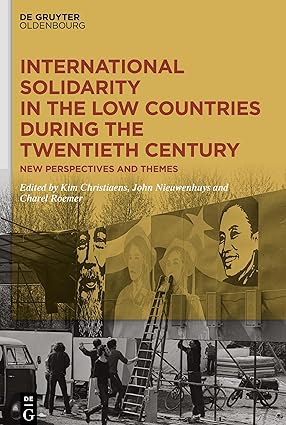 International Solidarity in the Low Countries during the Twentieth Century: New Perspectives and Themes
 300 Years of the French in Old Mines: A Narrative History of the Oldest Village in Missouri
 Escape from the Pit: A Woman's Resistance in Nazi-occupied Poland, 1939-1943 (Excelsior Editions)
 Alexandrine Teaching on the Universe (Routledge Revivals)
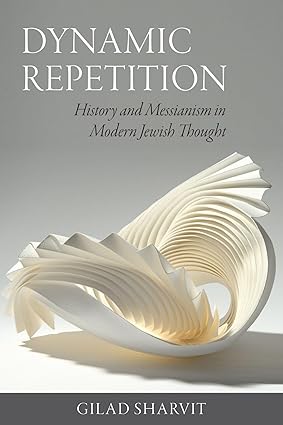 Dynamic Repetition: History and Messianism in Modern Jewish Thought (The Tauber Institute Series for the Study of European Jewry)
 The Latin Continuation of William of Tyre (Crusade Texts in Translation)
 Shmuel Hugo Bergmann: A Life between Prague and Jerusalem (Europäisch-jüdische Studien – Beiträge, 63)
评论前必须登录!
立即登录 注册