 电子书百科大全
 Explanatory Optimism about the Hard Problem of Consciousness
by: Josh Weisberg (Author)
Edition:1st
Publication Date: November 20, 2023
Language:English
Print Length:190 pages
ISBN-10:1032533439
ISBN-13:9781032533438
Book Description
Explanatory Optimism about the Hard Problem of Consciousness argues that despite the worries of explanatory pessimists, consciousness can be fully explained in “easy” scientific terms. The widespread intuition that consciousness poses a hard problem is plausibly based on how consciousness appears to us in first-person access. The book offers a debunking argument to undercut the justificatory link between the first-person appearances and our hard problem intuitions.The key step in the debunking argument involves the development and defense of an empirical model of first-person access: Automated Compression Theory (ACT). ACT holds that first-person access to consciousness is accomplished by automated accessing of compressed sensory information. Because of the distorting nature of this compressed access, it seems to subjects that consciousness possesses “exceptional” properties―properties leading to the hard problem―even though no such properties are present. If there are no exceptional properties to explain, then an explanation in easy terms can fully account for conscious experience. The book presents a range of empirical evidence for ACT and concludes that the burden of proof is now on the pessimists to show why we shouldn’t be optimistic about explaining consciousness.
About the Author
Explanatory Optimism about the Hard Problem of Consciousness argues that despite the worries of explanatory pessimists, consciousness can be fully explained in “easy” scientific terms. The widespread intuition that consciousness poses a hard problem is plausibly based on how consciousness appears to us in first-person access. The book offers a debunking argument to undercut the justificatory link between the first-person appearances and our hard problem intuitions.The key step in the debunking argument involves the development and defense of an empirical model of first-person access: Automated Compression Theory (ACT). ACT holds that first-person access to consciousness is accomplished by automated accessing of compressed sensory information. Because of the distorting nature of this compressed access, it seems to subjects that consciousness possesses “exceptional” properties―properties leading to the hard problem―even though no such properties are present. If there are no exceptional properties to explain, then an explanation in easy terms can fully account for conscious experience. The book presents a range of empirical evidence for ACT and concludes that the burden of proof is now on the pessimists to show why we shouldn’t be optimistic about explaining consciousness. Read more
Explanatory Optimism about the Hard Problem of Consciousness
相关推荐
 Progressive Industrial Policy in Europe
 Introducing Philosophy : Questions and Readings
 Philosophy: A Text With Readings 7th Edition
 Killer Psychopaths: The Inside Story of Criminal Profiling
 The Carbon Wave: A Story of Democracy, Parenthood, and the Race to Protect Our Planet
 The Castle: The Sunday Times Number One Bestseller
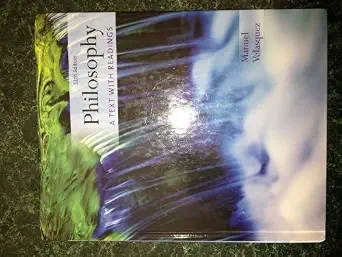 Philosophy: A Text With Readings 11th Edition
 A Feeling for Books: The Book-of-the-Month Club, Literary Taste, and Middle-Class Desire New Edition
评论前必须登录!
立即登录 注册