 电子书百科大全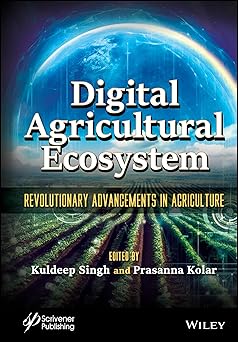
Digital Agricultural Ecosystem: Revolutionary Advancements in Agriculture
by: Kuldeep Singh (Editor),Prasanna Kolar (Editor)
Publisher:
Edition: 1st
Publication Date: 2024/4/17
Language: English
Print Length: 408 pages
ISBN-10: 139424293X
ISBN-13: 9781394242931
Book Description
Digital Agricultural EcosystemThe book comprehensively explores the dynamic synergy between modern technology and agriculture, showcasing how advancements such as artificial intelligence, data analytics, and smart farming practices are reshaping the landscape to ensure food security in the era of climate change, as well as bridging the gap between cutting-edge research and practical implementation.Agriculture has historically been the foundation of human civilization and benefits communities all around the world. Agriculture has a creative, adaptable, and innovative history, and as the digital age draws closer, agriculture is once again poised for change. Each of the 20 chapters explores the connection between agricultural and technological advancements, and are divided into four key areas. Part 1 covers knowledge sharing in the digital agricultural ecosystem. In the context of modern agriculture, the chapters underscore the importance of information flow. Through comprehensive reviews of literature and assessments of farmer participation on social media platforms, these chapters illustrate the value of information sharing for sustainable agriculture. Part 2 explores the adoption and impact of digital technologies in agriculture. The use of cutting-edge digital technologies in agriculture is examined thoroughly in this section. The chapters included here outline how precision, artificial intelligence, and blockchain technology have the potential to transform methods of agriculture and improve food systems. Part 3 addresses smart farming and sustainable agriculture. This section focuses on sustainability and offers details on eco-friendly production methods, the significance of smart farming in many nations, including India and the UK, and cost-effective fertilizer sprayer technologies. Part 4 examines the modeling and analysis of agricultural systems. This last section explores how mathematical modeling and data analytics are used in agricultural systems, with insights on everything from the study of credit access constraints in rural regions to water resource management in irrigation systems. AudienceThe diverse readership includes farmers, agronomists, agricultural researchers, policymakers, environmentalists, information technologists, and students from academic and professional fields who are eager to learn more about how digital innovation and sustainable agriculture can be used to address global issues such as climate change, food security, and smart farming.
About the Author
Digital Agricultural EcosystemThe book comprehensively explores the dynamic synergy between modern technology and agriculture, showcasing how advancements such as artificial intelligence, data analytics, and smart farming practices are reshaping the landscape to ensure food security in the era of climate change, as well as bridging the gap between cutting-edge research and practical implementation.Agriculture has historically been the foundation of human civilization and benefits communities all around the world. Agriculture has a creative, adaptable, and innovative history, and as the digital age draws closer, agriculture is once again poised for change. Each of the 20 chapters explores the connection between agricultural and technological advancements, and are divided into four key areas. Part 1 covers knowledge sharing in the digital agricultural ecosystem. In the context of modern agriculture, the chapters underscore the importance of information flow. Through comprehensive reviews of literature and assessments of farmer participation on social media platforms, these chapters illustrate the value of information sharing for sustainable agriculture. Part 2 explores the adoption and impact of digital technologies in agriculture. The use of cutting-edge digital technologies in agriculture is examined thoroughly in this section. The chapters included here outline how precision, artificial intelligence, and blockchain technology have the potential to transform methods of agriculture and improve food systems. Part 3 addresses smart farming and sustainable agriculture. This section focuses on sustainability and offers details on eco-friendly production methods, the significance of smart farming in many nations, including India and the UK, and cost-effective fertilizer sprayer technologies. Part 4 examines the modeling and analysis of agricultural systems. This last section explores how mathematical modeling and data analytics are used in agricultural systems, with insights on everything from the study of credit access constraints in rural regions to water resource management in irrigation systems. AudienceThe diverse readership includes farmers, agronomists, agricultural researchers, policymakers, environmentalists, information technologists, and students from academic and professional fields who are eager to learn more about how digital innovation and sustainable agriculture can be used to address global issues such as climate change, food security, and smart farming. Read more
Digital Agricultural Ecosystem: Revolutionary Advancements in Agriculture
相关推荐
 AI Prompt Book Magic: Fun & Creative AI Prompts For Jokes, Stories, Art & Gift Ideas
 Generative AI For Dummies (For Dummies (Business & Personal Finance))
 Mastering Time Series Analysis and Forecasting with Python: Bridging Theory and Practice Through Insights, Techniques, and Tools for Effective Time Series Analysis in Python
 The Oxford Handbook of European Romanticism
 Context Engineering for Verified Output: Master Getting Verified Consistent Output Through Example Stories
 Vectorization: A Practical Guide to Efficient Implementations of Machine Learning Algorithms
 High Performance Polymers
 The Comprehensive DevOps Interview Guide: Mastering DevOps systems for your successful interview
评论前必须登录!
立即登录 注册