 电子书百科大全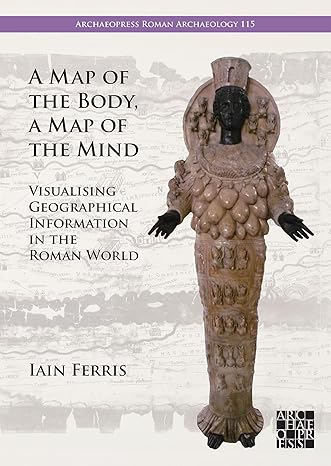
A Map of the Body, a Map of the Mind: Visualising Geographical Knowledge in the Roman World (Archaeopress Roman Archaeology, 115)
by: Iain Ferris (Author)
Publisher: Archaeopress
Publication Date: 2024/6/13
Language: English
Print Length: 350 pages
ISBN-10: 1803277815
ISBN-13: 9781803277813
Book Description
A Map of the Body, a Map of the Mind considers the relationship between geography and power in the ancient Roman world, and most particularly the visualisation of geographical knowledge in myriad forms of geography products, including geographical treatises, histories, poems, personifications, landscape representations, images of barbarian peoples, maps, itineraries, and imported foodstuffs. As Rome broke its political bounds and headed towards empire the whole city became the centre and the Roman worldview changed with it. The Roman state then needed to present to the Roman people an easily digestible narrative about its imperial ambition and imperial possessions, in a way that went beyond the fact that servitude, enslavement, and misery for many underpinned this expansion. There needed to be a publicly guided discourse centred around the smoothing out of difference, rather than its obliteration or elimination, and the presentation of many different life worlds in a familiar way using geographical information. This marked a way of directing how change could be managed and of reimagining how the world might be and might work at the intersection between selection, knowledge, and insight. Reflection and communication sought to create a communal sense of belonging. If not actually doors, these geographical images were at least windows onto self-identity and otherness, letting light in on a sombre struggle against accidie.
About the Author
A Map of the Body, a Map of the Mind considers the relationship between geography and power in the ancient Roman world, and most particularly the visualisation of geographical knowledge in myriad forms of geography products, including geographical treatises, histories, poems, personifications, landscape representations, images of barbarian peoples, maps, itineraries, and imported foodstuffs. As Rome broke its political bounds and headed towards empire the whole city became the centre and the Roman worldview changed with it. The Roman state then needed to present to the Roman people an easily digestible narrative about its imperial ambition and imperial possessions, in a way that went beyond the fact that servitude, enslavement, and misery for many underpinned this expansion. There needed to be a publicly guided discourse centred around the smoothing out of difference, rather than its obliteration or elimination, and the presentation of many different life worlds in a familiar way using geographical information. This marked a way of directing how change could be managed and of reimagining how the world might be and might work at the intersection between selection, knowledge, and insight. Reflection and communication sought to create a communal sense of belonging. If not actually doors, these geographical images were at least windows onto self-identity and otherness, letting light in on a sombre struggle against accidie. Read more
A Map of the Body, a Map of the Mind: Visualising Geographical Knowledge in the Roman World (Archaeopress Roman Archaeology, 115)
未经允许不得转载:电子书百科大全 » A Map of the Body, a Map of the Mind: Visualising Geographical Knowledge in the Roman World (Archaeopress Roman Archaeology, 115)
相关推荐
 The History of Anti-Semitism, Volume 3: From Voltaire to Wagner
 International Solidarity in the Low Countries during the Twentieth Century: New Perspectives and Themes
 300 Years of the French in Old Mines: A Narrative History of the Oldest Village in Missouri
 Escape from the Pit: A Woman's Resistance in Nazi-occupied Poland, 1939-1943 (Excelsior Editions)
 Alexandrine Teaching on the Universe (Routledge Revivals)
 Dynamic Repetition: History and Messianism in Modern Jewish Thought (The Tauber Institute Series for the Study of European Jewry)
 The Latin Continuation of William of Tyre (Crusade Texts in Translation)
 Shmuel Hugo Bergmann: A Life between Prague and Jerusalem (Europäisch-jüdische Studien – Beiträge, 63)
评论前必须登录!
立即登录 注册